
Potato cultivation (Kaufland)
Objective
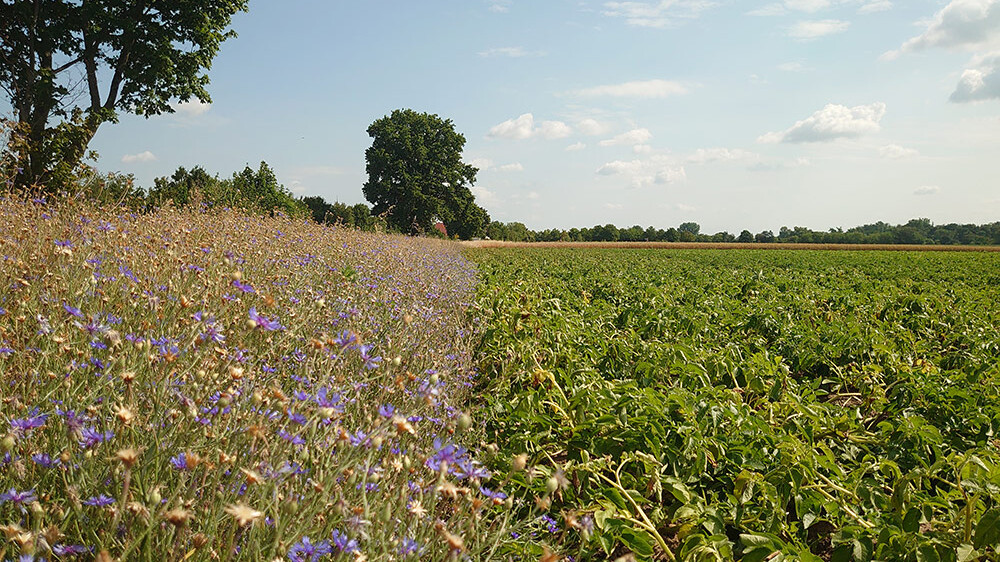
Promoting biodiversity in potato cultivation by creating habitats and food sources for beneficial insects. In addition, investigating whether beneficial insect strips can reduce pesticide use on cultivated areas.
Project overview
Company
Kaufland
Participating organisations
Wild company, Lake Constance Foundation
Pilot project duration
January 2022 – May 2023
Location
Northern Upper Rhine, Baden-Württemberg
Number of farms
4
Pilot crop area
57 ha
Selected measures
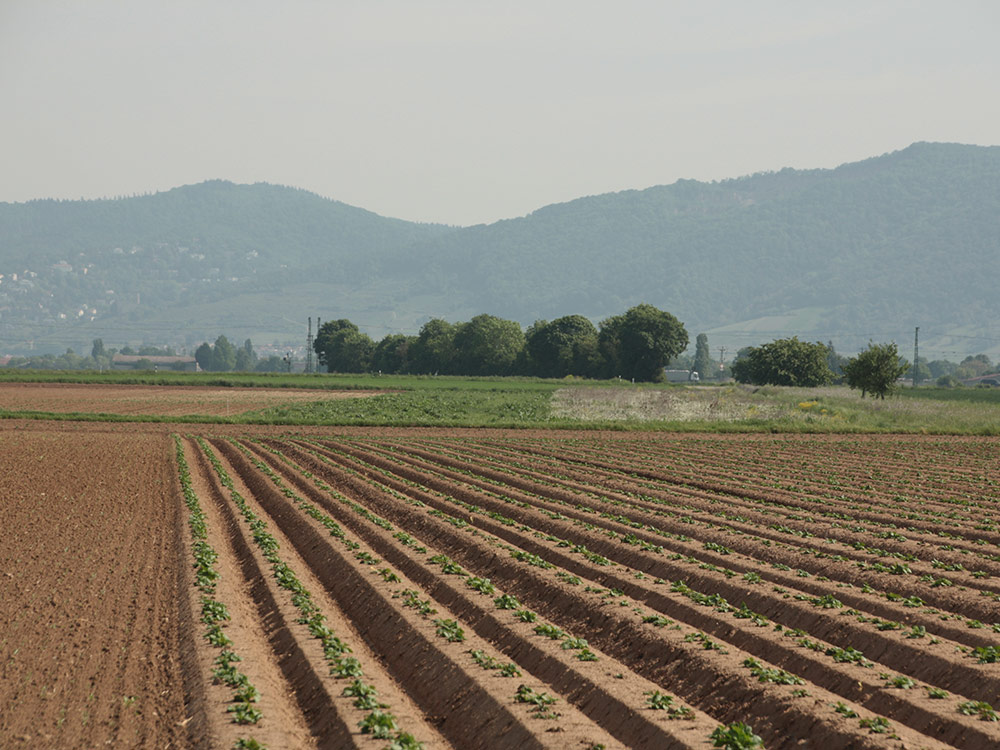
Establishment of the beneficial insect strip
The beneficial insect strips were established along the potato ridges and therefore have direct contact with the potato plants. The photo shows a field 10 days after sowing the beneficial insect strip.
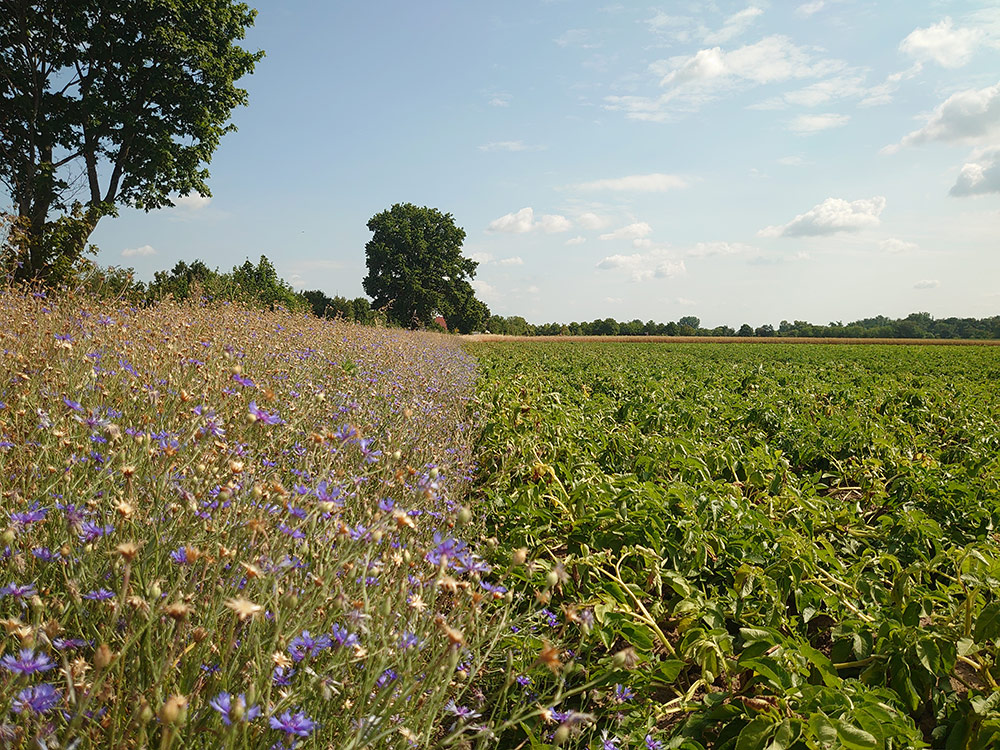
Annual beneficial insect flowering strips at regular intervals
The beneficial insect flowering strips were established at regular intervals in the potato fields. This creates habitats for insects in otherwise large fields with few shelter options.
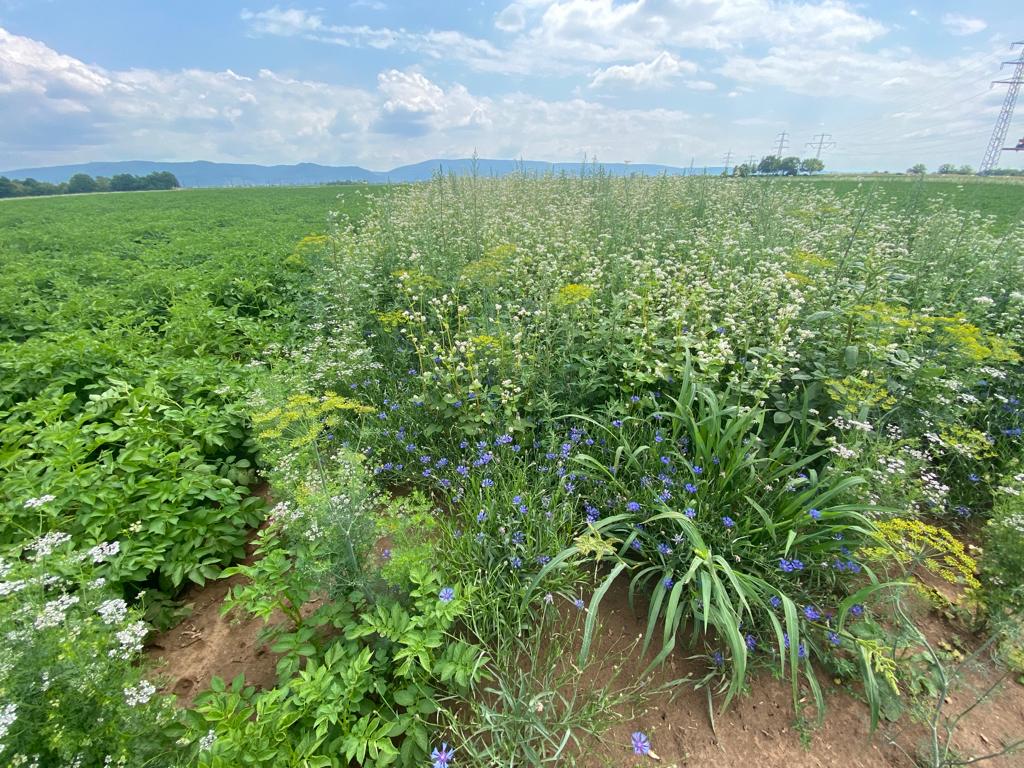
Beneficial insect flowering strip at the end of June
At the end of June, this beneficial insect flowering strip provides good shelter, habitat and food for various insects.
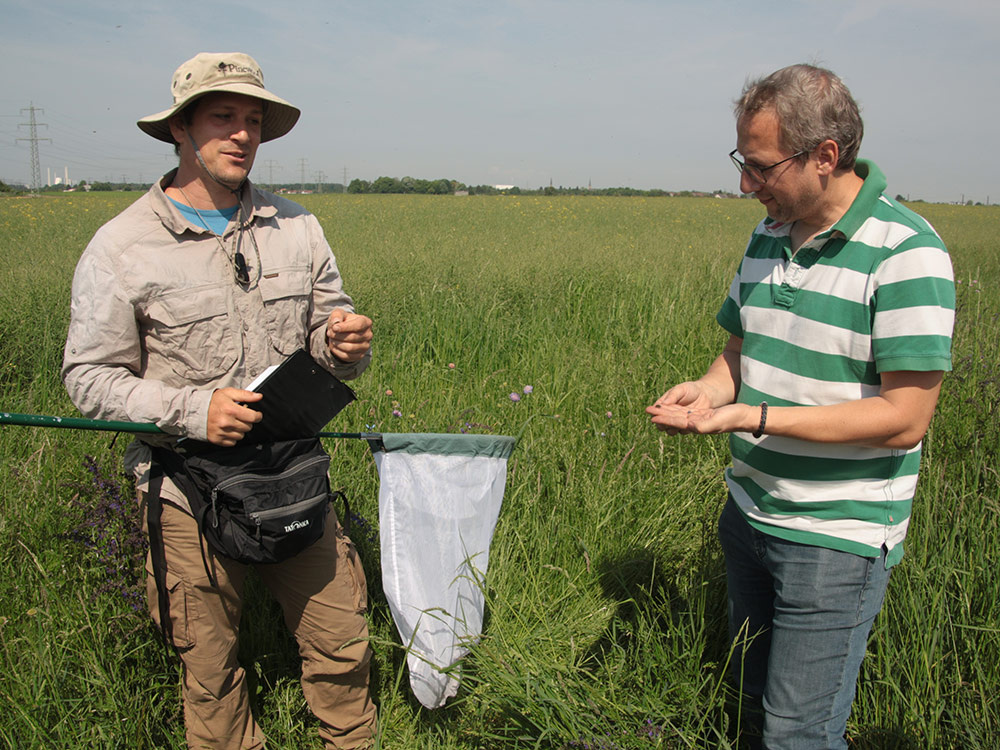
Monitoring insect diversity
On several dates, an entomologist recorded insects on the pilot areas in terms of abundance and species composition and checked the differences compared with reference areas without beneficial insect flowering strips. Here you can see the preliminary briefing.
Training and further activities
Recurring meetings of all participating farm managers to coordinate implementation of the measures, accompanied by a crop advisor from Wild.
Monitoring of wild bees, aculeate hymenopterans and wasps to verify the success of the measures
Pilot project successes
Measures were tested that question fundamental principles of modern intensive agriculture. One example is the establishment of beneficial insect flowering strips on 10% of the potato fields. This made large cultivated areas more species-rich and created measures to promote biodiversity.
As part of the pilot project, it was possible to pursue a cooperative approach and implement biodiversity measures together with nature conservation, agriculture and the market. All stakeholders were involved, the implementation of measures was discussed jointly, and cost-covering financing was ensured. As a result, both farmers’ acceptance and their interest in biodiversity increased. Overall, the beneficial insect strips contributed to a positive image of agriculture.
As part of the monitoring, some beneficial insects as well as rare species were detected in the beneficial insect strips. It is also clear that the food supply for pollinating insects was significantly increased by the measure.
Contact
Kaufland Stiftung & Co. KG
Press office: presse@kaufland.de
Lake Constance Foundation
Saskia Wolf: saskia.wolf@bodensee-stiftung.org